eSIM, travel content
Japan Cashless Payments Guide for Tourists
How to Pay Cash-Free Across Japan and When You’ll Still Need Cash
Japan maintained a reputation as a strictly cash-based destination for years until a massive digital payment transformation changed how tourists get around.
You can’t travel to Japan entirely cashless, certain experiences and transportation lines still demand physical payments, but today, you can handle most of your payments with your smartphone or a card. This guide explains the main cashless payment methods available to tourists, what to set up before travelling, where you may still need yen, and why reliable mobile data can make payments easier during your trip.


Common Cashless Payment Methods for Tourists in Japan
Most travellers will benefit from preparing a combination of credit or debit cards, contactless payments, an IC transit card, and some physical cash.
1. Credit & Debit Cards
Visa and Mastercard work almost everywhere you’d expect - hotels, big department stores, convenience store chains, particularly in cities such as Tokyo, Osaka and Kyoto. American Express (AMEX) covers big chains, but local shops usually won't accept it.
When a payment terminal gives you the option to pay in Japanese yen or your home currency, choose Japanese yen. Paying in your home currency may trigger Dynamic Currency Conversion, which typically uses a less favourable exchange rate and may include an additional markup.
It is also worth carrying a second physical card in case your main card is declined, blocked, or unsupported by a particular payment terminal.
2. Contactless Payment and Mobile Wallets (Tap-to-Pay)
Contactless card payments are increasingly common at major retailers, convenience stores, hotels, and restaurants. Look for the contactless payment symbol on the terminal rather than assuming every merchant will recognise the terms Apple Pay or Google Pay.
Some contactless transactions can work without your phone having an active data connection at the moment of payment. However, mobile data may still be useful for:
- Setting up or updating a digital wallet
- Receiving banking verification requests
- Approving transactions through a banking app
- Checking payment notifications
- Troubleshooting a declined transaction
Pro tip: Keep a physical card on you: don't rely 100% on your phone. Ticket machines, car rentals, and older card readers still need you to insert a physical chip card.
3. QR Code Payments (PayPay)
Look around any small street food stall and you'll see a red PayPay QR code. It’s widely used in Japan, but most short-term tourists can't sign up for the app because it requires a local phone number for registration.
The known workaround is using an Asian e-wallet like Alipay, Kakao Pay, Touch 'n Go, GCash. You can just open your home app and scan the shop's PayPay QR code directly - the system translates the payment quickly.
Before relying on this option, check whether your existing wallet supports payments in Japan. QR payments generally require an active internet connection to load the app, scan the code, and confirm the transaction.

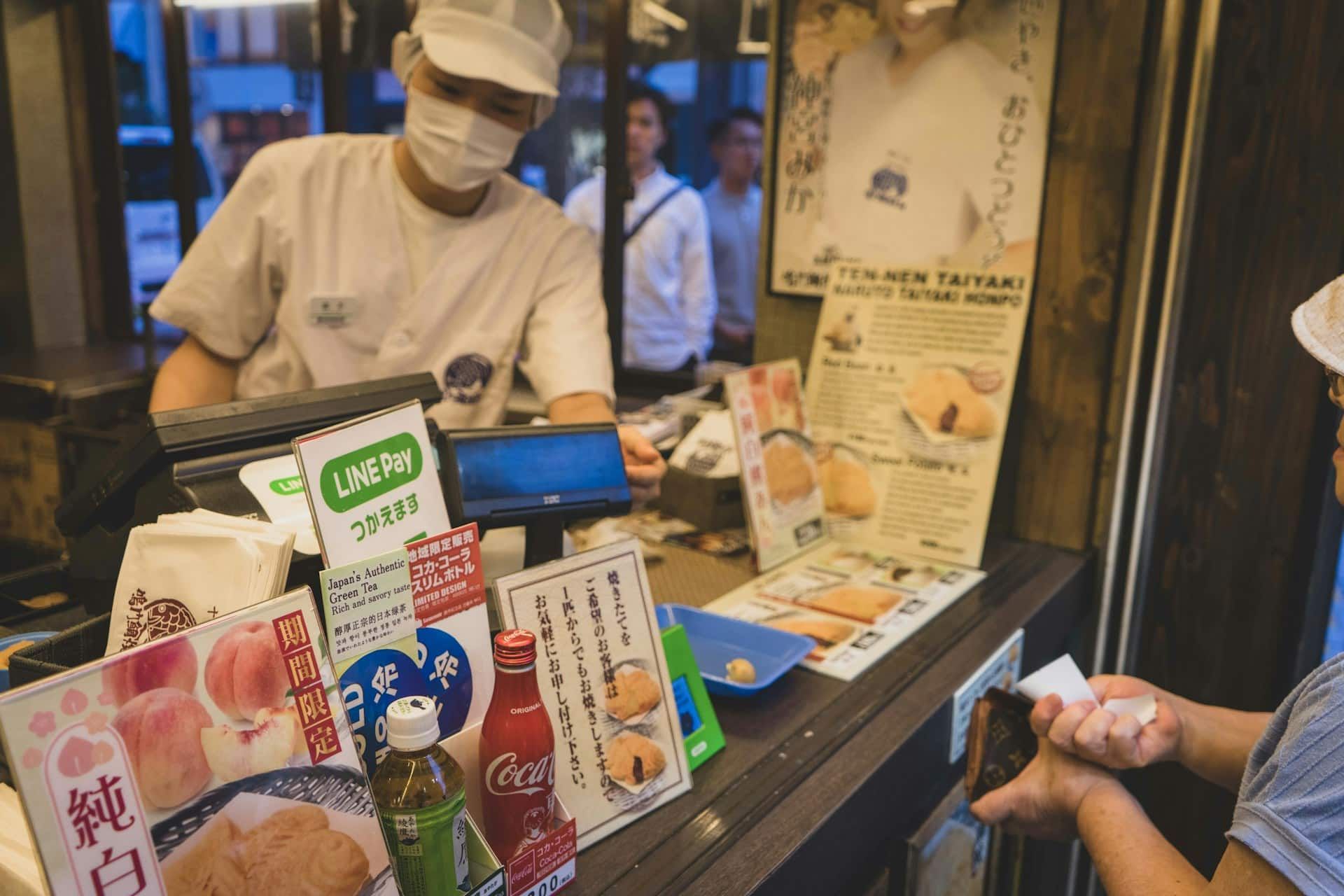
Suica or PASMO As Payment Method
Though originally designed as transportation cards, IC cards such as Suica and Pasmo can be used as tap-and-go wallets in shops, machines, lockers, and restaurants across Japan.
Setting one up before travelling can make it easier to pay for small everyday purchases without repeatedly using a credit card or handling coins.
For iPhone Users
- Open Apple Wallet
- Tap the “+” button
- Select “Transit Card”
- Search for Suica or PASMO
- Add funds using a supported payment card
Remember you’ll need a reliable connection for recharging your digital wallet. Once the card has been set up and funded, it can generally be used for offline taps at compatible terminals.
For Android Users
Unfortunately, most Android devices sold outside Japan are unable to use virtual IC cards for hardware reasons. You can get a Welcome Suica or Tourist PASMO card upon arrival. Topping up physical SUICA/Pasmo cards can be done on train station ticket machines and it can only be topped up with cash.
Where You’ll Still Need Cash in Japan
While major cities make it easy to go cashless, physical cash (yen) is still essential across rural Japan. Cash is especially needed once you visit smaller towns, traditional inns, and local transport routes.
Having yen on hand is helpful for:
- Cultural sites: Shrine amulets, temple entrance fees, and fortune slips.
- Transportation: Older station coin lockers, rural buses and ferries.
- Local eats: Street food vendors and small, traditional restaurants.
- Less-touristed areas: Family-run guesthouses and local shops off the main train line.
Prepare a reasonable cash reserve based on your itinerary, maintaining a general benchmark of about 10,000 yen (~US$ 60) per day for out-of-pocket, cash-only expenses, as outlined in this comprehensive guide on how much cash to bring to Japan.Travellers spending most of their time in major cities may need less, while those visiting rural areas should carry more cash.
ATMs at convenience stores and post offices are commonly used by international visitors, although withdrawal fees and card compatibility can vary.
Why Mobile Data Still Matters for Cashless Travel
Mobile data does not power every card or IC-card transaction directly, but it supports many parts of the cashless payment experience.
A reliable internet connection can help you:
- Recharge your Suica or PASMO card
- Receive OTP for two-factor authentication or banking verification requests
- Approve transactions through your banking app or resolve payment issues
- Check exchange rates and transaction notifications
- Find nearby merchants or ATMs
- Access map and transport information after paying
For this reason, mobile data is useful even when you also carry cash and physical cards.
A travel eSIM allows you to connect without relying on airport SIM counters, portable Wi-Fi hardware, or inconsistent public Wi-Fi. You can install the eSIM before departure and connect after arriving in Japan.
Nomad offers Japan eSIM plans for different trip lengths and data requirements. Travellers comparing providers can also refer to our guide to the best eSIMs for Japan.
Pre-Trip Checklist for Cashless Payments in Japan
- Check whether your credit or debit card charges foreign transaction fees.
- Bring at least two physical payment cards where possible.
- Choose Japanese yen when offered a currency choice at payment terminals.
- Set up Suica or PASMO if your device supports it.
- Check whether your home digital wallet supports QR payments in Japan.
- Carry some yen for cash-only businesses and rural travel.
- Install and activate your Japan eSIM according to the plan instructions.
- Make sure you can receive banking verification messages abroad.
Using a combination of cards, mobile payments, mobile data, and cash will give you the most reliable payment setup during your trip.


Frequently Asked Questions
Can I travel to Japan completely cashless?
It is not recommended to travel to Japan without any cash. While credit cards and mobile payments are widely used in big cities, physical cash (yen) is still mandatory for temple/shrine entry fees, street vendors, small local restaurants), older station lockers, and rural buses.
How do I avoid high foreign transaction fees on card payments?
When paying with a credit or debit card at a terminal, always choose to pay in Japanese Yen rather than your home currency. Choosing your home currency triggers Dynamic Currency Conversion, which adds steep hidden markups and poor exchange rates.
Can tourists use PayPay in Japan?
Most short-term visitors cannot register directly for the Japanese PayPay app. However, some tourists may be able to pay at participating PayPay merchants through supported overseas wallets connected to services such as Alipay+. Compatibility depends on the wallet, home market, and merchant.
What are the most common cashless payment methods travelers use in Japan?
The most common options include international credit or debit cards, contactless card payments, Suica or PASMO IC cards, and selected overseas QR wallets supported by participating merchants.
Do I need mobile data to use cashless payments in Japan?
Not every payment requires a live internet connection. Physical cards and funded IC cards can often work without mobile data at the moment of payment. However, data may be needed for QR payments, wallet top-ups, banking verification, transaction approvals, and troubleshooting.
Nomad eSIM Free Trial
Try Nomad eSIM risk-free with our free trial - no contracts, no commitment. Set up in minutes, enjoy secure connectivity, and manage everything easily through the Nomad eSIM app.